Weddings in Tanzania

A wedding guest list counts seats, not names.

Mzee Elias is invited with six seats. Familia ya Mollel with four. The ceremony, the send-off and the reception are three different rooms with three different crowds, and at the end of it the michango have to balance. This is the part of a wedding a spreadsheet stops helping with.

Create your workspaceStart planning for free.
Seats printed on every invitationSend-off and reception counted apartMichango in TZS, voided rather than deleted
A wedding guest list in Waalikwa, with a seats column showing families holding six, five and four seats each beside couples holding two.

Seats

Six seats on one invitation, not six invitations.

A Tanzanian guest list is families, not individuals. One card goes to Mzee Elias Mwaisaka and admits six; the next goes to a couple and admits two. Waalikwa keeps the seat count against the name, prints it on the card, and counts it down at the gate.

  • Family, couple, single — or a number you set yourself
  • The gate counts seats admitted, not cards scanned
  • A family that arrives four strong out of five is recorded as four
The guest list screen, showing each guest's category and the number of seats their invitation admits.

Sittings

The send-off and the reception are not the same guest list.

Most of a wedding day is three events wearing one name. The ceremony fills the morning, the send-off belongs to the bride's family, and the reception is a larger crowd again in the evening — running past midnight. Set them as separate sittings and each one counts its own arrivals.

  • Ceremony, send-off and reception as three sittings of one event
  • A sitting that ends after midnight stays one sitting, not two days
  • Read the calendar by day, week, month or year
The Waalikwa calendar in month view, with colour-coded chips for each event and each of the wedding's three sittings.

Michango

Pledges, instalments, and what is actually in hand.

The committee meets, pledges are made, and then they arrive in pieces across the following month — some by mobile money, some in cash, some not at all. The ledger keeps pledged and received apart, records who took each payment, and voids a mistaken entry with a reason instead of erasing it.

  • Pledged, received and outstanding, each its own figure
  • Cash and mobile money, with a reference against each
  • A pledge written down twice is voided with a reason, never deleted
  • Expenses on the same book, in TZS
The michango ledger, showing contributors, pledged and received amounts in Tanzanian shillings, and recorded expenses.

The invitation

One card per family, with the seats written on it.

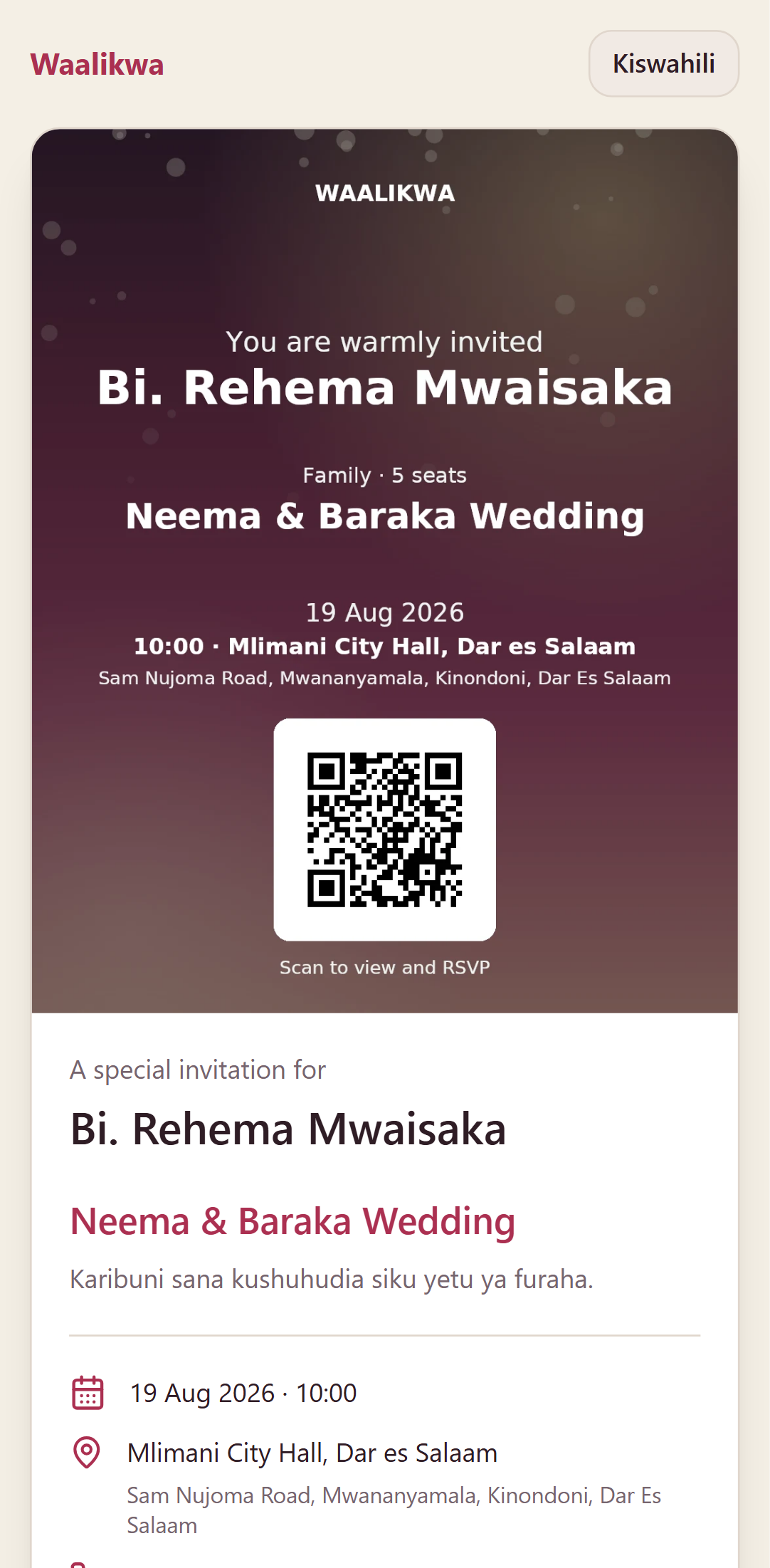
Generated per guest, carrying their name and what the card admits. You send it yourself from your own WhatsApp, so it arrives from a number your guests already know, and the code on it is what gets them through the gate.

  • The guest's name and seat count printed on the artwork
  • A scannable code unique to that invitation
  • Sent from your number, not from ours
A wedding invitation as the guest sees it on their phone, reading Family and five seats above the event details and a scannable code.

Start with the guest list you already have.

Import the spreadsheet, set the seats, and generate the invitations. The sittings and the ledger can wait until you need them.

Create your workspace